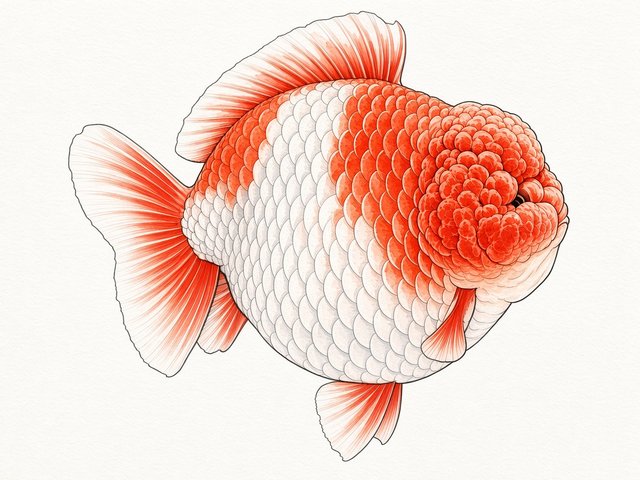

Happy Lucky Fish Club
Practical freshwater hobbyist reference. Not a vet clinic.
Varieties
Tosakin: parts diagram
How to read a tosakin (土佐錦魚) from above: I name every part in English and Japanese and explain what judges look for. Open the tosakin guide · see it as a hologram
Ranchu: parts diagram
How to judge a ranchu (らんちゅう) from above and from the side, with every part named in English and Japanese. Open the ranchu guide · see it as a hologram
Oranda: head types, body and tail
How to tell a good oranda: hood, body, and tail, plus the main types you’ll see. Open the oranda guide · see it as a hologram
Chinese goldfish variety tree
How Chinese breeders sort their goldfish (中国金鱼品种图), from body type down to each variety and its crosses, in Chinese, pinyin, and English. Open the variety tree
Site map
- Sick fish — first response, quarantine, symptom index, when to stop / escalate
- Diseases — parasite and disease cards + parasite ID table
- Treatments — supportive care, dips, wounds, heat notes, meds notes, salinity table (g/gal preferred)
- Protocols — quarantine, new fish acclimation, ich, flukes, dips
- Medications — one entry per medication: doses per liter and per US gallon, what not to combine, conversion tables
- Starter kit — what to have on the shelf: buckets, salt, scale, test kit, medicine chest; quarantine without a cycled filter
- Tosakin — top-view diagram with part names (English / 日本語 / romaji), ideal circle, tail-attachment angle
- Ranchu — top and side diagram with part names (English / 日本語 / romaji), back line and tail attachment
- Oranda — name and history, regional types, head (hood) types, body, tail and colours
- Variety tree — Chinese goldfish varieties by trait group, with crosses (中文 / pinyin / English)
- Cross calculatorNew — expected fry ratios for scale type, telescope eye, and albino, plus the traits no calculator can predict
- Salt calculator — how much plain salt to add for a target ppt or specific gravity, in grams, tablespoons, and cups, with safe-range warnings
- Volume calculator — gallons and liters from inches or a standard tank size, plus heater wattage for a 10°F rise
- The Tosakin, the Fish Food Bag, and David Salazar — how a Japanese Tosakin line got from a fish food bag to my tanks
- About / Disclaimer — what this is, what it is not, salt scale note, gaps
Salt, in one line
Use a kitchen scale. Target 0.1% = 1 ppt = 1000 ppm ≈ 3.8 g salt per US gallon. Teaspoons are approximate only — last resort if you have no scale. Full table on Treatments.
What you will not find here
- Folk remedies (no floating garlic, no “floating food makes fish float” superstition)
- Private necropsy reports, lab names, case IDs, or tank IDs
- Invented medical claims — we organize existing hobbyist notes and flag contradictions
Breeding projects
[PLACEHOLDER — not written yet.] Space reserved for the club's goldfish breeding notes. No strains, availability, or prices are listed here until real content is supplied.